Бердк
Бердк

What T Slot Fasteners Are and Why They Matter
T slot fasteners are the hardware components that hold T-slot aluminum framing systems together. Without them, the extruded aluminum profiles that make up machine guards, workstation frames, conveyor structures, and industrial enclosures are just lengths of metal sitting next to each other. T slot fasteners are what transform individual extrusions into rigid, load-bearing assemblies that can be built, adjusted, and reconfigured without welding or permanent modification to the profiles themselves.
The term "T slot fastener" covers a broad family of hardware — T nuts, T bolts, drop-in nuts, roll-in nuts, anchor fasteners, panel fasteners, and end-feed bolts — all designed to engage with the continuous longitudinal groove machined into T-slot aluminum extrusions. This groove, which has a narrow opening at the surface and a wider channel below, is the defining feature that makes T-slot framing so versatile. Any fastener designed to seat in that channel and resist pullout when tightened qualifies as a T slot fastener in the broad sense, though each type has distinct installation characteristics, load ratings, and appropriate applications.
Choosing the right T slot fastener for a given joint or connection is not simply a matter of picking whatever is cheapest or most readily available. The wrong fastener type can result in slipping connections, profile damage, inadequate clamping force, or structures that cannot be safely reconfigured without destroying the fastener. Getting this decision right upfront saves time, money, and frustration throughout the build process and over the life of the structure.
The Main Types of T Slot Fasteners and How Each One Works
Each category of T slot fastener is engineered around a specific installation method and connection geometry. Understanding how each type physically engages with the slot — and where it excels or falls short — is the foundation of good fastener selection.
T Nuts
The T nut is the most fundamental T slot fastener. It consists of a flat or slightly beveled body with a threaded hole through its center, shaped so that it slides into the T-slot groove and sits flush against the underside of the slot opening when a bolt is tightened from above. T nuts must be inserted into the end of an extrusion before assembly is complete, or through a pre-drilled access hole, because their geometry does not allow them to drop in through the slot face. This end-feed insertion requirement is the primary limitation of basic T nuts — it means that adding or repositioning a T nut after a frame is fully assembled often requires partial disassembly.
T nuts are available in a range of thread sizes — M3, M4, M5, M6, M8, M10, and M12 being the most common in metric systems, with 10-32, 1/4-20, 5/16-18, and 3/8-16 common in imperial applications. Material is typically zinc-plated steel for standard applications, with stainless steel available for corrosive or food-grade environments. For high-vibration installations, T nuts with a serrated or spring-loaded face are available that grip the slot walls and resist loosening under dynamic loading.
Drop-In T Nuts
Drop-in T nuts solve the end-feed limitation of standard T nuts by incorporating a spring-loaded mechanism or a pivoting design that allows them to be inserted through the face of the slot at any point along the extrusion's length. The nut body is oriented parallel to the slot during insertion, dropped through the opening, and then rotated 90 degrees — either manually or automatically as the bolt is tightened — so that its flanges engage the underside of the slot walls. Drop-in nuts are significantly faster to install during assembly and are the preferred choice when fastener positions need to be added or changed after initial frame construction.
The trade-off compared to standard T nuts is a slight reduction in holding strength in some designs, because the engagement surface is determined by the pivot mechanism rather than full-width contact. For most light to medium structural applications this difference is negligible, but for high-load connections — particularly in shear — standard end-feed T nuts or dedicated structural connection hardware should be used instead.
Roll-In T Nuts
Roll-in T nuts, also called slide-in nuts or economy T nuts, are a simpler drop-in variant that rely on a spring steel ball or retaining clip to hold the nut in position after insertion through the slot face. They are inexpensive, fast to install, and work well for light-duty applications such as panel mounting, guarding, and non-structural attachments. However, they offer less reliable engagement than drop-in pivot nuts under repeated tightening cycles, and the spring retention can lose effectiveness over time. Roll-in T nuts are best used where the connection is permanent once assembled, rather than in joints that will be repeatedly adjusted or disassembled.
T Bolts and T Head Bolts
Where T nuts accept a separate bolt from outside the slot, T bolts — sometimes called T head bolts or hammer head bolts — incorporate the T-shaped head as part of the bolt itself. The T-shaped or hammer-shaped head is inserted into the slot and rotated into engagement, while the threaded shank protrudes outward to accept a standard hex nut or flange nut. T bolts are commonly used for attaching external components — hinges, casters, brackets, sensors, cable management clips — directly to the face of an extrusion without requiring access to the slot interior from the end. They are also the standard fastener used with T-slot clamping systems on machine tool tables and welding fixtures.
Anchor Fasteners and Corner Connectors
Anchor fasteners are purpose-designed T slot connection hardware used to join two extrusion profiles at right angles — the most common joint in any T-slot frame. Rather than relying on a simple nut-and-bolt arrangement, anchor fasteners use a body that fits inside the extrusion bore and a clamping mechanism that pulls the two profiles tightly together when tightened with an Allen key through an access hole in the face of one profile. Anchor fasteners provide a much stronger, more rigid corner joint than a simple bracket-and-T-nut arrangement, and they create a flush external appearance with no protruding hardware. They are the preferred internal connection method for structural frames, machine bases, and enclosures where appearance and rigidity both matter.
T Slot Fastener Sizing: Matching Fasteners to Profiles
T slot fasteners are not universal — they must be matched to the specific slot width and profile series of the extrusion they are used with. Getting this wrong is one of the most common mistakes made by engineers and builders new to T-slot systems, and it results in fasteners that either fall through the slot, cannot be inserted, or do not clamp properly.
T-slot aluminum extrusions are manufactured in a range of series sizes, most commonly defined by the outer dimension of the square or rectangular profile cross-section. The most widely used metric series are 20, 30, 40, 45, 60, 80, and 90mm profiles, each with a corresponding slot width. The table below summarizes the standard relationships between profile series, slot width, and typical T nut thread size:
| Profile Series | Slot Width (mm) | Typical T Nut Thread | Common Applications |
| 20 Series | 6mm | M3 / M4 | Small enclosures, 3D printer frames, light fixtures |
| 30 Series | 8mm | M5 / M6 | Workstation frames, display stands, light guarding |
| 40 Series | 8mm / 10mm | M6 / M8 | Machine guards, conveyor frames, industrial workstations |
| 45 Series | 10mm | M8 | Bosch Rexroth compatible systems, automation structures |
| 80 / 90 Series | 10mm / 12mm | M8 / M10 | Heavy structural frames, robot bases, gantry systems |
Beyond the slot width and thread size, buyers must also verify compatibility with the specific brand or standard their extrusions follow. The two dominant international standards are the European metric system — used by suppliers such as Item, Bosch Rexroth, and Minitec — and the inch-based system popularized by 80/20 in North America. While many dimensions overlap, slot profiles and nut body geometries are not always interchangeable between brands even within the same nominal series size. Always confirm compatibility with your extrusion supplier before ordering fasteners from a third-party source.
Material and Finish Options for T Slot Fasteners
T slot fasteners are manufactured in several different materials and surface finishes, each suited to different operating environments and load requirements. Selecting the right material is especially important in applications involving moisture, chemicals, food contact, or elevated temperatures.
- Zinc-plated steel: The standard material for the vast majority of T slot nuts, T bolts, and anchor fasteners used in indoor industrial environments. Zinc plating provides adequate corrosion resistance for dry conditions and offers good mechanical strength at a low cost. Not suitable for wet, humid, or chemically aggressive environments.
- Stainless steel (Grade 304 and 316): Specified for food processing, pharmaceutical, marine, outdoor, and wash-down environments where corrosion resistance is critical. Grade 316 offers superior resistance to chloride-induced corrosion compared to 304 and is preferred for coastal or chemical applications. Stainless steel T slot fasteners carry a significant price premium over zinc-plated equivalents — typically two to four times the cost — but are non-negotiable in regulated food and medical manufacturing settings.
- Black oxide steel: Provides a matte black appearance and mild corrosion resistance improvement over bare steel. Commonly specified for aesthetics in exposed frame applications and for machine tool clamping hardware where a non-reflective surface is preferred.
- Aluminum T nuts: Used in lightweight frames and applications where galvanic corrosion between dissimilar metals is a concern. Aluminum fasteners have lower tensile strength than steel equivalents and should not be used in high-load structural connections, but work well for panel mounting, sensor brackets, and other light-duty attachments.
- Plastic and nylon T nuts: Available for very light-duty applications, electrical isolation requirements, or environments where metal fasteners would cause contamination. Not appropriate for structural connections or any application subject to significant mechanical loading.
How to Calculate How Many T Slot Fasteners You Need
Underordering fasteners is one of the most frustrating and common mistakes in T-slot frame builds. Running out of T nuts or anchor fasteners mid-build stalls the entire assembly process and triggers an emergency order that almost always arrives too late. A systematic approach to fastener quantity estimation prevents this problem.
Start by identifying every joint type in your frame design. For each 90-degree corner joint using anchor fasteners, you need one anchor fastener per joint. For each face-mounted bracket, accessory, or panel clamp, you need one T nut and one appropriate bolt per fixing point. Count the number of slots being used on each profile face — a 40×80mm profile has four slot faces, and if you are mounting panels to three of those faces, you need T nuts on all three. Add a minimum 10–15% overage to your total count to account for positioning adjustments, damaged fasteners, and future modifications. For large builds, a 20% buffer is not excessive.
It is also worth considering stock depth if you are building T-slot frames regularly. Keeping a working inventory of the most common T nut sizes — typically M5 and M6 drop-in nuts in your primary profile series — eliminates project delays and allows on-the-spot design changes without waiting for resupply. Bulk packs of 50, 100, or 500 units offer substantially better per-unit pricing than small quantity orders and are a sensible investment for any workshop or fabrication team that uses T-slot systems frequently.
Installation Tips That Prevent the Most Common Fastener Problems
Even with the correct fasteners selected and in hand, poor installation technique causes a significant proportion of T-slot assembly problems. The following practical guidance addresses the issues that come up most frequently on the shop floor and in fabrication workshops.
Achieving Correct Torque Without Damaging the Slot
Over-tightening is the leading cause of T-slot profile damage in assembly. When a T nut bolt is torqued beyond the recommended value, the nut body is pulled upward with enough force to deform the aluminum slot walls, creating permanent indentations that weaken the profile and prevent future nut repositioning at that location. As a general rule, M5 T nut bolts should be tightened to approximately 4–5 Nm, M6 to 8–10 Nm, and M8 to 18–22 Nm — but always check the fastener manufacturer's torque specification for the specific product. Using a torque wrench rather than relying on feel is strongly recommended, particularly for builders who are new to T-slot systems or working with lighter-series profiles.
Ensuring Drop-In Nuts Are Fully Engaged Before Tightening
Drop-in and roll-in T nuts that are not properly rotated into engagement before tightening will not clamp correctly and can strip out under load. After inserting a drop-in nut through the slot face, always verify that it has rotated fully into the seated position before threading in the bolt. Most drop-in nuts make a tactile click or resistance change when correctly engaged, but this feedback can be subtle. A simple test is to lightly push upward on the nut body with a finger — if it moves, it is not fully engaged. For roll-in nuts, ensure the spring ball is seated properly in the slot channel before proceeding.
Preventing Fastener Creep in Vibrating Applications
T slot fastener connections are susceptible to loosening under sustained vibration — a significant concern in machine frames, conveyor structures, and any application involving rotating machinery or dynamic loading. Standard bolts tightened into smooth T nuts will gradually back off under vibration without additional locking measures. Solutions include using T nuts with serrated or knurled faces that bite into the slot walls, applying a medium-strength thread-locking compound such as Loctite 243 to the bolt threads before assembly, or fitting spring washers or nylon-insert lock nuts on the bolt side of the connection. For safety-critical applications — machine guards, load-bearing structures, and overhead assemblies — thread-locking compound plus a torque check at installation is the minimum acceptable standard.
Keeping Slots Clean for Reliable Nut Insertion
Aluminum swarf, dust, weld spatter, and paint overspray accumulating in T-slots are common causes of T nut insertion difficulty and incomplete engagement. Before beginning assembly, blow out all slots with compressed air and, if necessary, run a cleaning tool or strip of masking tape through the channel to remove debris. For profiles that have been powder coated or painted after cutting, check that the slot opening and internal channel are clear of excess coating — factory profiles are typically protected with slot inserts during painting, but field-painted assemblies often suffer from coating buildup that narrows the effective slot width.
Specialty T Slot Fasteners for Specific Applications
Beyond the standard T nut and T bolt, a range of specialty T slot fastening hardware addresses specific connection challenges that arise in more demanding or unusual applications. Being aware of these options can simplify designs that would otherwise require complex custom fabrication.
- Swivel T nuts: Feature a rotating nut body that allows the thread axis to pivot relative to the slot, enabling angular connections between profiles that are not at exact 90-degree increments. Useful in ergonomic workstation designs and angled guard sections.
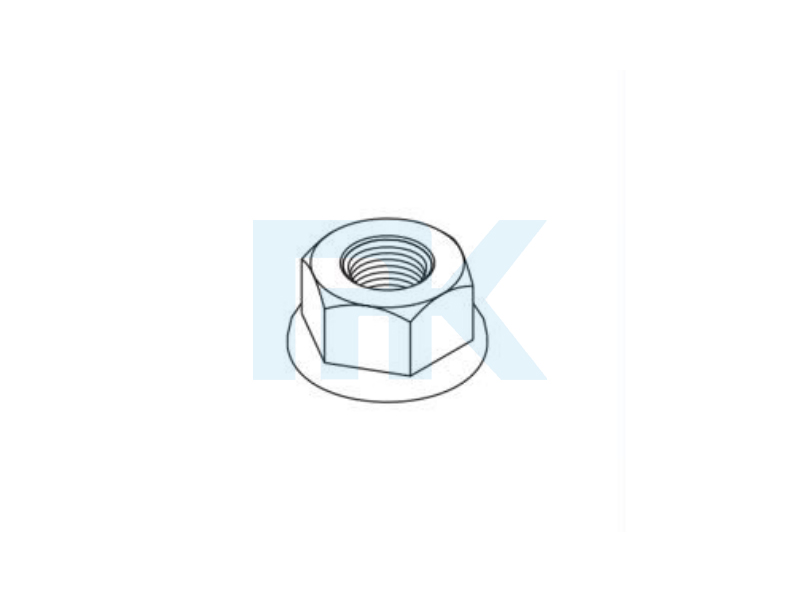
- Flange T nuts: Incorporate a larger flanged face that distributes clamping load over a wider area of the slot, reducing the risk of aluminum deformation under high clamping forces. Preferred for anchoring heavy accessories or external components subject to significant pull-out loads.
- Panel T nuts and quarter-turn fasteners: Designed for fast panel attachment and removal, these fasteners allow polycarbonate, aluminum, or steel panels to be secured to T-slot frames with a quarter-turn twist rather than a fully threaded bolt. Ideal for access panels on machine guards that need to be opened frequently for maintenance.
- Welded T nuts: Pre-welded to a steel plate or bracket for integration into custom fabricated components that need to interface with T-slot extrusions. Used in applications where a machined or stamped part must bolt directly to a T-slot profile face without a separate loose nut.
- Captive T nuts: Retained in a carrier strip or tape format for high-volume assembly applications, allowing rapid sequential insertion of T nuts into long slot runs without handling individual fasteners. Used in automated assembly lines and high-throughput fabrication environments.
Where to Source T Slot Fasteners and What to Watch Out For
T slot fasteners are available from a wide range of suppliers — from the original T-slot system manufacturers such as 80/20, Item, Bosch Rexroth, and Minitec, through to generic hardware distributors, industrial fastener specialists, and online marketplaces. Each sourcing channel has distinct advantages and risks that are worth understanding before placing an order.
Buying directly from the extrusion system manufacturer guarantees dimensional compatibility with your profiles and gives you access to technical support and full product documentation including load ratings and installation specifications. The trade-off is typically higher unit pricing compared to generic alternatives. For critical structural applications, safety-critical machine guards, or builds where disassembly and reconfiguration are planned, manufacturer-sourced fasteners are the lowest-risk choice.
Generic T slot fasteners from distributors and online suppliers can offer significant cost savings — sometimes 50–70% less than branded equivalents — and are entirely adequate for many applications. However, dimensional tolerances, material quality, and surface finish consistency vary considerably between suppliers. When evaluating generic T slot nuts and bolts, request dimensional drawings or samples before committing to a bulk order, and verify that the slot engagement dimensions match your specific profile series. Be particularly cautious with very low-cost fasteners from unverified sources: undersized T nut bodies that don't fully engage the slot undercut, or overtorquing bolts in soft steel nuts, are failure modes that carry real safety implications in structural applications.